Varsha Goswami |
Introduction – Racing Together for Clean Air
On some mornings in Delhi, the smog is so thick that monuments disappear, flights are delayed, and schools are forced to shut down. It’s a reminder that in India, air pollution isn’t an abstract problem – it’s the air we breathe, the cough in a child’s chest, the mask on a biker’s face.
Every September 7, the world observes the International Day of Clean Air for Blue Skies, a United Nations initiative started in 2019. This year’s theme, “Racing for Air – Every Breath Matters”, borrows from the language of sport to remind us that fighting for clean air is not a sprint but a marathon. Like athletes training for endurance, countries, states, and communities must commit for the long run.
For India, and especially coal-dependent states like Jharkhand, the challenge is not just technical, it’s deeply personal: how do we ensure every family can breathe easier, today and tomorrow?
Performance – Accelerating India’s Progress
Think of this as the warm-up lap. India has made important strides under the National Clean Air Programme (NCAP), launched in 2019 to cut PM2.5 and PM10 pollution (MoEFCC, 2019). The initial 20–30% reduction target by 2024 has been extended to 40% by 2026, covering 131 non-attainment cities with city-level Clean Air Action Plans (PIB, 2023).
By 2024, India had 1,524 air quality monitoring stations (558 continuous and 966 manual), a big step forward, though many smaller towns remain outside regular tracking (Energy and Clean Air Research Centre, 2024). On the financial side, nearly ₹19,711 crore has been allocated for NCAP till 2026, of which about 57% has been released and 50% used (Resource Governance Insights, 2025).
Encouragingly, 103 of 131 NCAP cities have reduced PM10, with 64 achieving improvements over 20%. Yet, several cities still face worsening air quality (Times of India, 2024). To drive accountability, the government introduced Swachh Vayu Survekshan rankings, which publicly reward high performers. Alongside NCAP, broader measures such as BS-VI fuel standards, FAME II for EVs, and over 237 GW of renewable energy capacity, 47% of India’s power mix, are strengthening clean air outcomes (MNRE, 2025).
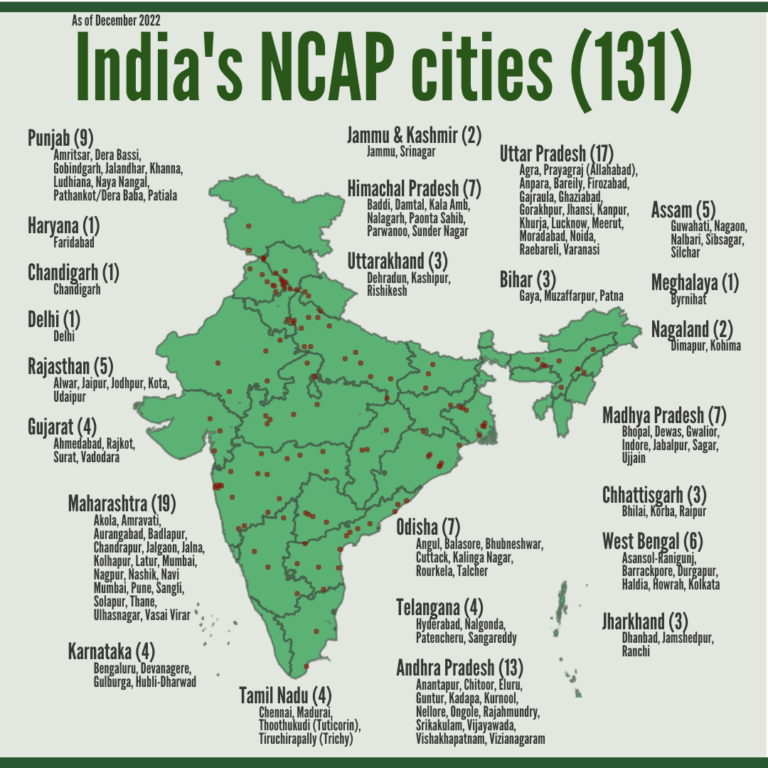
Figure 1: India’s 131 non-attainment cities under NCAP (https://urbanemissions.info/india-air-quality/india-ncap-cities/)
Looking ahead, action must expand beyond 131 cities to a wider airshed and state-level approach, with stronger monitoring networks, use of low-cost sensors, and funding tied to measurable emission reductions. This would ensure clean air efforts reach not just cities but also peri-urban and rural areas.
Endurance – Building Stamina for the Long Run
Air pollution in India has built up over decades, and quick fixes like water sprinkling or traffic bans are not enough; real solutions require persistence, strong governance, and long-term planning, as reflected in the extension of NCAP to 2026 (PIB, 2023). Endurance means creating solutions that last beyond political cycles, with community-led models such as solar microgrids run by self-help groups showing the power of local ownership.
For Jharkhand, where over half the districts depend on coal and nearly a third of state revenues are tied to it, the transition will demand decades of planning, large-scale skill development, and economic diversification (Times of India, 2025).
Endurance also depends on stronger institutional capacity, with state-led hybrid models reducing overlaps and composite indicators like absolute PM2.5 reduction providing a clearer measure of progress. Taken together, these approaches can make the transition consistent, accountable, and inclusive, especially critical for coal-dependent states like Jharkhand. The message is clear: the race has started, but we cannot lose momentum.
Equity – Who Breathes What?
Here’s the harshest truth: clean air is not evenly shared. A roadside chai-seller in Delhi, a construction-site worker in Mumbai, a child in a village kitchen burning firewood, or a miner’s family living near a coalfield in Jharkhand breathes in far more toxic air. A Around 40% of households still rely on solid fuels such as wood, dung, and crop residue, leading to over 600,000 premature deaths annually from household air pollution (IHME, 2020; WHO, 2021). Roadside and informal workers in cities like Delhi are exposed to PM2.5 concentrations exceeding 15–20 times the WHO safe limit of 5 µg/m³ (CPCB, 2023). Children are particularly at risk, with air pollution contributing to 18% of annual deaths among those under five (UNICEF, 2019).
Ensuring equity means prioritising access to clean cooking fuels, protecting low-income communities near industrial zones, and adopting inclusive planning that reduces exposure for the most at risk. Such measures would not only lower pollution but also create healthier, more resilient communities. If every breath matters, then clean air must be treated as a basic right, not a luxury.
Jharkhand’s Crossroads – From Coal Dust to Blue Skies
Jharkhand represents the heart of India’s challenge. With 13 out of 24 districts rich in coal and 32% of state revenues tied to coal, the state’s economy is deeply dependent on fossil fuels (Times of India, 2025). Transitioning to a clean future here is not only about replacing coal with renewables, but also about reshaping livelihoods and ensuring social justice.
Jharkhand has an estimated renewable energy potential of nearly 66 GW, including about 46 GW from solar and wind and 20 GW from pumped hydro storage (as shown in figure 2 and 3), but current deployment is just 434 MW, around 7% of its capacity (CEED & Government of Jharkhand, 2025; MNRE, 2025). Transitioning away from coal will take decades, requiring careful planning, large-scale skill development, and economic diversification. Long-term strategies will need to focus on reskilling workers, effectively using DMFT funds for livelihood diversification, empowering panchayats in local planning, and ensuring women and tribal communities are actively involved in decision-making (CEED, 2025).

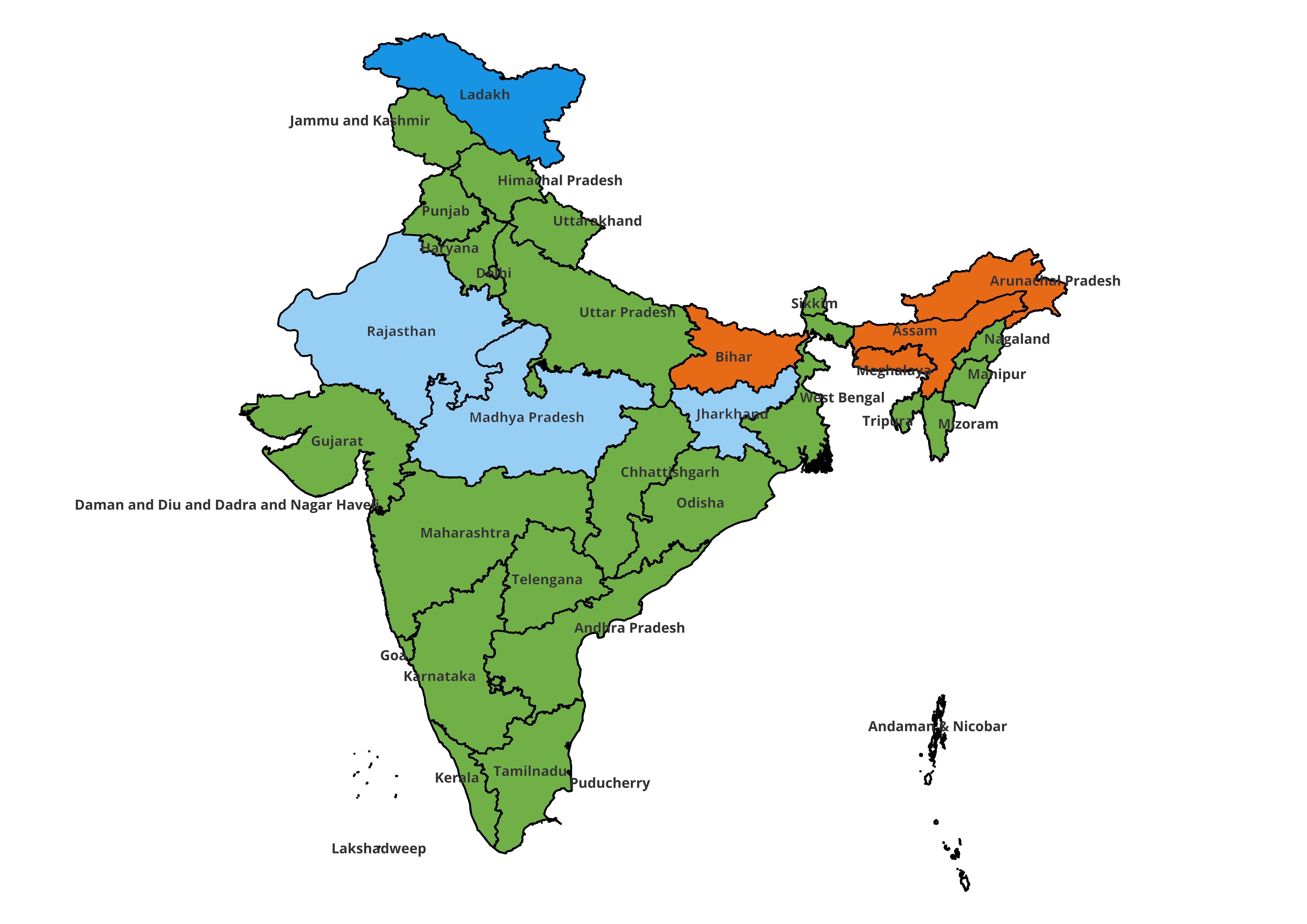
Figure 2: Renewable energy potential from solar and wind (CEED,2025)


Figure 3: Renewable energy potential from pumped hydro storage (CEED,2025)
The Way Forward – Running Together
To win the race for clean air, India and Jharkhand must unite three critical drivers:
- Policy: enforce clean air action plans and ensure accountability.
- Finance: mobilize green bonds, transition funds, and DMFT resources for cleaner industries and community livelihoods.
- People: empower local communities, self-help groups, and panchayats to co-create and own solutions.
Clean air is a race that no single actor can win alone, it requires collaboration across governments, businesses, and citizens.
Conclusion – Blue Skies for Every Breath
From Delhi’s jam-packed Ring Road to Jharkhand’s coalfields, the race for clean air is the same: every breath must matter. Blue skies are not a dream; they’re a destination. But India can only get there with the endurance of a marathon runner – steady, committed, and united.
References
- Central Pollution Control Board (CPCB). (2023). National Ambient Air Quality Status & Trends (2023). Government of India.
- Central Pollution Control Board (CPCB). (2022). Swachh Vayu Survekshan city rankings. Government of India.
- Centre for Environment and Energy Development (CEED). (2025). Framework for Sustainable Just Transition. CEED.
- Centre for Environment and Energy Development (CEED) & Government of Jharkhand. (2025). Powering Progress: Unlocking Jharkhand’s Renewable Energy and Storage Potential. CEED.
- Energy and Clean Air Research Centre. (2024). NCAP monitoring network progress.
- Government of India. (2019). National Clean Air Programme (NCAP). Ministry of Environment, Forest and Climate Change.
- Institute for Health Metrics and Evaluation (IHME). (2020). Global Burden of Disease Study 2019 (GBD 2019) Results. Seattle, WA: IHME.
- Ministry of New and Renewable Energy (MNRE). (2025). India’s renewable energy installed capacity. Government of India.
- Press Information Bureau (PIB). (2023). NCAP target extension and coverage. Government of India.
- Resource Governance Insights. (2025). NCAP budget allocations and utilisation.
- Times of India. (2025). State lags in renewable energy generation despite huge potential. The Times of India.
- Times of India. (2024). City-level performance and PM10 reduction status.
- UN Environment Programme (UNEP). (2025). International Day of Clean Air for Blue Skies: Theme 2025. UNEP.
- UNICEF. (2019). Silent Suffocation in Africa and Asia: Household air pollution and the impact on children. United Nations Children’s Fund.
- World Health Organization (WHO). (2021). Household air pollution and health. Geneva: WHO.