Niva Mishra| Riya Sethia
India’s climate vulnerability is marked by compounding disasters like cyclones, floods, droughts, and heatwaves—with 40% of districts experiencing swapped weather patterns (flood-to-drought transitions) and over 80% of the population exposed to high-risk zones. Against this backdrop, it is essential to know how the most populous country perceives climate change and understands the need for climate action. According to the Yale Climate Opinion Maps for India only 41% of Indians know a lot or something about global warming, while around 82% of Indians believe that global warming is happening and only 54% attribute it to human activities.
Clear communication is an essential tool to help communities proactively cope and adapt to the climate change impacts and resulting events. Effective communication can bridge the knowledge gap, enabling people to take informed actions to mitigate emissions and adapt to climate extremes. Using narratives that resonate with local values and experiences can make climate change more relatable and actionable for diverse societal groups in the country.
Evolution of climate change understanding in India since the 1990s
|
Era |
Dominant Communicators |
Primary Mediums |
Core Narratives |
|
1990s |
Scientists, Diplomats |
Reports, Journals |
Equity, Responsibility |
|
2000s |
Media, NGOs |
Newspapers, Workshops |
Policy, Development |
|
2010s |
Activists, Journalists, Researchers |
TV, social media |
Vulnerability, Adaptation |
|
2020s |
Youth, Creatives, Startups |
Apps, Podcasts, Vernacular Media |
Action, Innovation, Resilience |
Societal perception towards climate change amongst urban and rural India
|
Urban India |
Rural India |
|
|
Awareness |
Urban Indians are generally more aware of climate change and its impacts. But a significant portion believes that the government, businesses, and individuals are responsible to mitigate climate risks. |
Rural communities recognize climate impacts through direct livelihood disruptions like erratic monsoons, precipitation patterns, and crop failure. Although, their traditional practices and local strategies are adaptive to climate change, due to lack of awareness rural Indians remain inclined towards shifting to a modern lifestyle. |
|
Misconception |
There are misconceptions about the primary causes of climate change, with many attributing it to ozone-depleting products rather than sectoral emissions. Despite awareness, many urban Indians perceive climate change as a distant concern, which leads to a lack of immediate action. |
Rural population often fails to associate climate change with broader health impacts and economic losses and focus on seasonal diseases/health impacts without linking them to long-term changes. |
Emerging role of Youth and Students
Young Indians are increasingly becoming aware of climate change and its implications and are more likely to support climate action and advocate for policy changes. The youth are often at the forefront of climate activism, pushing for sustainable practices and renewable energy adoption. Educational initiatives that empower youth with accurate climate information can foster a generation of climate leaders who can drive change from the grassroots level.
Prime Minister Modi’s “Lifestyle for Environment” (LiFE) initiative could serve as a framework for this educational push, particularly through emphasis on practical, locally relevant climate solution.
Challenges in Communicating to Communities about Climate Change & Need for Climate Action
Barrier in language & scientific understanding: Use of technical terms and scientific language creates a lack of inclusive communication and becomes a barrier between experts/scientists and policymakers, strategists and local communities. This limits the ability of policy makers to understand the challenges and make effective decisions while limiting community engagement in grassroot climate action. For instance,
Scientific Terms vs. Local Understanding
Scientific discussions on climate change often use specialized terms like “radiative forcing,” “ocean acidification,” “Decarbonization”, “Desertification,” and “ENSO” (El Niño-Southern Oscillation), which are not commonly understood by the general public. These terms are crucial for scientific research and policy-making but can alienate local communities who may not be familiar with them.
Local communities are more likely to understand and relate to terms that describe immediate impacts of climate change, such as “heatwaves and cold waves,” “droughts”, “floods”. These terms are directly linked to their everyday experiences and livelihoods.
Cultural & Traditional Relevance: Climate change communication needs to be culturally relevant and context-specific. Using local examples and terms that resonate with community experiences can help bridge the gap. For instance, explaining climate change impacts through the lens of agricultural cycles or traditional weather patterns can make the information more accessible and actionable to farmers.
Limited Access to Information & Updates: A significant challenge is the inclusion and access to data backed information in public discussions, which has led to lack of alignment between policymakers/decision makers and the community.
Effective strategies to Climate Communication
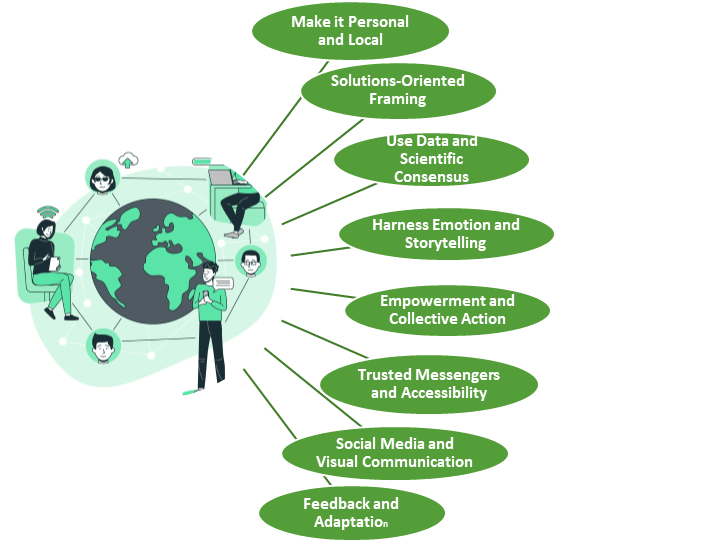
Figure 1: Effective strategies to communicate climate change
Tools & Strategies for Community-based Learning & Understanding
Climate ‘Saathis’: Volunteer-led community engagement process where people volunteer as ‘climate saathis‘. Training these community volunteers about building awareness on climate risks and community-level participatory planning for climate resilience amongst the larger community groups and vulnerable/marginalized population.
Games for Fun-based Learning: Developing community games through which people can easily and interestingly understand the impacts of climate change and appropriate climate actions at community level. For example, the Red Cross Red Crescent Climate Centre Games includes physical games that impart knowledge on climate impacts, through actual simulation like a game where participants experience the greenhouse effect.
Storytelling: Individuals without a scientific background and proper awareness are usually reluctant and disinterested to participate in technical discussions related to pressing issues and needed solutions. Dovetailing information on climate change with personal narratives and utilizing data-backed storytelling as a mode of interaction and awareness generation is a powerful tool as such stories create emotional connection and make issues relatable.
Reframing the “message” & localizing the content: Climate action messaging must have inclusive language and data-backed terms that resonates with community’s shared values and build trust to bridge connections and disintegrate silos. Additionally, audience archetypes, their key values and concerns must be understood to effectively land a message and translate scientific information into local concepts and daily life experiences.
Events, Festivals & Digital Presence: Events like sport events, fairs, cultural festivals, folk art dances, etc. offers an excellent opportunity to engage communities and new audiences. Digitally, messages and information can be amplified through visual aids like posters, charts, films, etc. by partnering with trusted content creators.
Role of Technology and Digital Media
Climate Change Applications (Apps): Mobile apps in regional languages can help spread climate change awareness among a broader audience. For instance, National Aeronautics and Space Administration (NASA)’s Earth Now could be designed for India, providing localized climate information and interactive platforms for discussion.
Digital Initiatives: Platforms like Village Knowledge Centers (VKCs) and Village Resource Centers (VRCs) use technology to disseminate climate-related information to rural communities, enhancing their resilience to climate impacts. This can be further levelled up as a common digital interactive platform which is easy to use and community friendly.
Online platforms like social media, blogs, and video-sharing sites are also becoming increasingly important for disseminating information about climate change and boosting user engagement.
Impact Based Forecasting: Using technology for user-group based forecasting during extreme weather events like cyclones and floods, helps specific groups prepare and respond effectively. For example, different impact-based forecasting methods for hospitals, schools, residents, etc.
Conclusion
Effective action is needed to foster easy, smooth and target-driven climate communications in the country. Policymakers, researchers, educators, local NGOs, media personnels, local communities and volunteers must collaborate to strengthen technical capacity, and raise public awareness. Efforts are needed to:
-
Prioritize and address issues related to climate change, and engage in discussions with local population regarding potential solutions.
-
Circulate the importance of sustainable lifestyle and encouraging people to transition towards it.
-
Boost journalism built on technical expertise to communicate urgent issues accurately and effectively to the public.
-
Communicate the economic benefits of climate action, such as job creation in renewable energy, particularly important in regions dependent on conventional energy sources.
-
Initiate climate discussions as part of casual conversations while hiking, morning walk, tea break and lunch, at work place, or gym or any other place where organic talk can build trust.
References:
- Sigma Earth. (n.d.). Effective climate change communication strategies. From https://sigmaearth.com/climate-change-communication-strategies/
- Dupar, M., McNamara, L., & Pacha, M. (2019). Communicating climate change: A practitioner’s guide. Insights from Africa, Asia and Latin America. https://unfccc.int/sites/default/files/resource/Communicating%20climate%20change_Insights%20from%20CDKNs%20experience.pdf
- Harvard T.H. Chan School of Public Health. (n.d.). Climate communication tips. Health Communication Research. https://hsph.harvard.edu/research/health-communication/resources/climate-communication-tips/
- Yale Program on Climate Change Communication. (n.d.). https://climatecommunication.yale.edu/about/what-is-climate-change-communication/
- United Nations Development Programme. (2022, November 8). Are we communicating climate change wrong? https://www.undp.org/blog/are-we-communicating-climate-change-wrong-here-are-five-ways-improve
- https://timeforbetter.org/project/communicating-climate-in-a-conservative-era/
- https://indianexpress.com/article/world/climate-change/earth-day-global-survey-climate-change-ipsos-9284893/
https://www.nature.com/articles/d44151-024-00145-0 https://www.climatecentre.org/priority_areas/innovation/climate-games/