Saurav Acharya |
As India accelerates its clean-energy transition, the last decade has witnessed dramatic growth in renewable installations, particularly solar and wind. Under its Paris Agreement Nationally Determined Contribution (NDC), India committed to achieving about 50 percent cumulative electric power installed capacity from non-fossil fuel-based energy resources by 2030, supported by technology transfer and low-cost finance [1,2]. At the COP26 Summit in Glasgow (2021), Prime Minister Narendra Modi further raised the ambition in India’s Panchamrit declaration by pledging 500 GW of non-fossil capacity by 2030, including renewables, large hydro, and nuclear [3].
Scaling RE for Accelerated Growth
As illustrated in Figure 1, solar installations skyrocketed from just 7 GW in FY 2015-16 to 116 GW in FY 2025-26 (up to June 2025), corresponding to an average annual growth rate of 36.5% over the decade. This rapid expansion has been driven by aggressive reverse auctions under the Jawaharlal Nehru National Solar Mission, steep declines in module prices, and streamlined grid connectivity protocols.
Figure 2 captures wind energy’s more measured ascent, from 27 GW to 52 GW, with year-on-year gains fluctuating between 3% and 20%, yielding an average growth of 7.3%. Continued policy support through bundled tenders, repowering of aging sites, and enhanced turbine technology has sustained this momentum, even as the market matures.
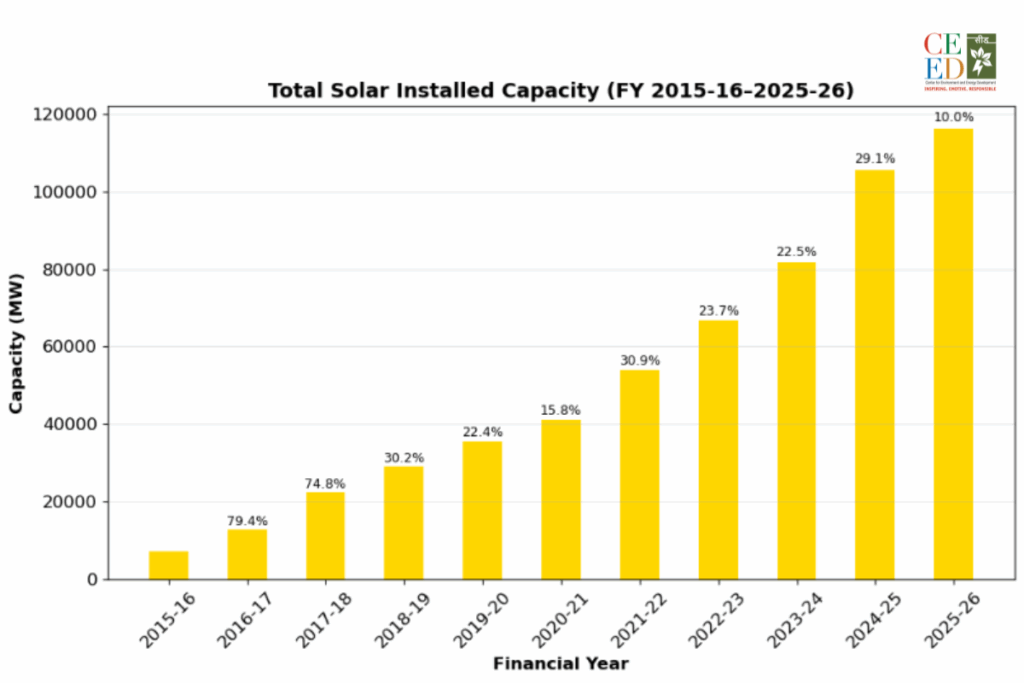
Fig. 1: Total installed capacity of solar from FY 2015-16 to 2025-26. [FY 2025-26 is upto June 2025].
(The percentage figures above each bar shows the year-on-year growth percentage of India’s solar fleet) [Source: https://iced.niti.gov.in/energy/electricity/generation/capacity]
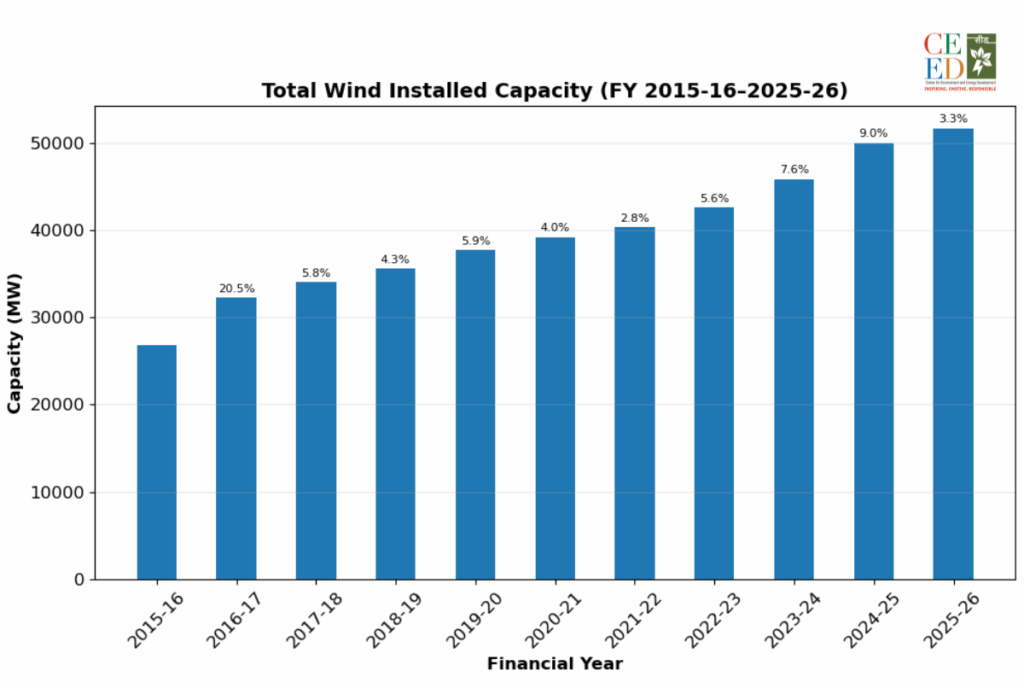
Fig. 2: Total installed capacity of wind from FY 2015-16 to 2025-26. [FY 2025-26 is upto June 2025].
(The percentage figures above each bar shows the year-on-year growth percentage of India’s wind technology) [Source: https://iced.niti.gov.in/energy/electricity/generation/capacity]
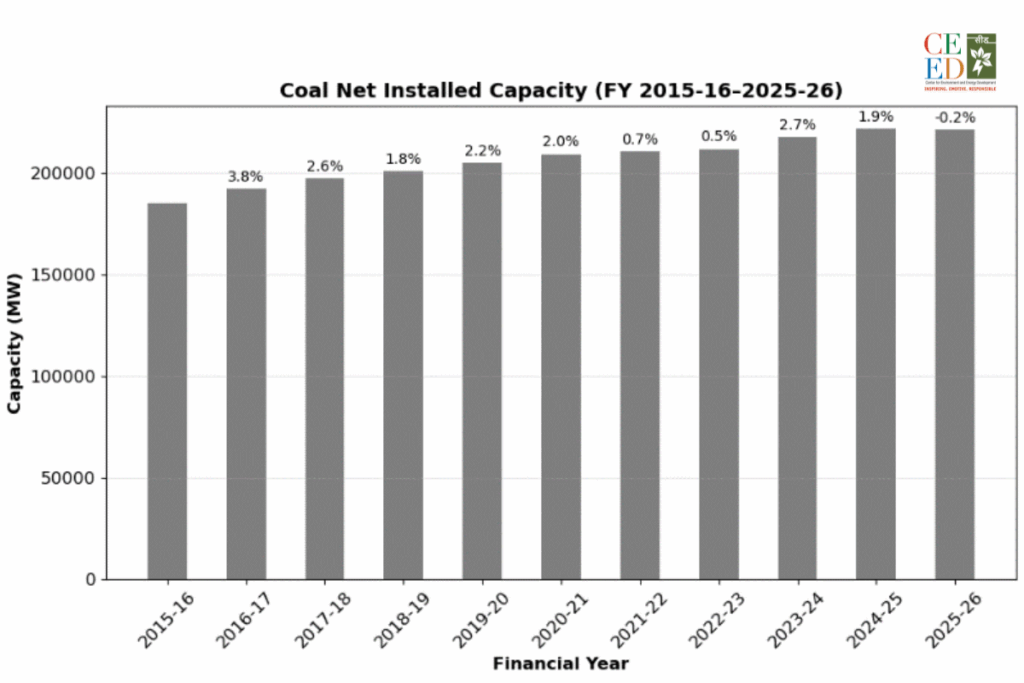
Fig. 3: Total installed capacity of coal from FY 2015-16 to 2025-26. [FY 2025-26 is upto June 2025].
(The percentage figures above each bar shows the year-on-year growth percentage of India’s coal installed capacity) [Source: https://iced.niti.gov.in/energy/electricity/generation/capacity]
Meanwhile, Figure 3 shows the annual growth of coal from FY 2015-16 to FY 2025-26 with an average growth rate of only 2.02% (from FY 2015-16 to FY 2024-25). The combined effect is shown in Figure 4, where renewables (solar, wind, hydro, bio, small hydro, nuclear) match non-renewables (coal, oil, gas) at ~242 GW in FY 2025-26, fulfilling NDC’s 50% non-fossil capacity breakeven five years ahead of schedule [4].
Capacity ≠ Generation: The Utilisation Gap?
Although India has pushed its installed renewable capacity to 50%, actual generation from renewables lags at around 25%, with coal still supplying roughly 75% of electricity (as shown in Figure 5). This utilisation gap comes from capacity factors: solar at ~20%, wind at ~24% versus coal at ~60%, and diurnal and seasonal variability, where midday solar surpluses cannot cover evening peaks.
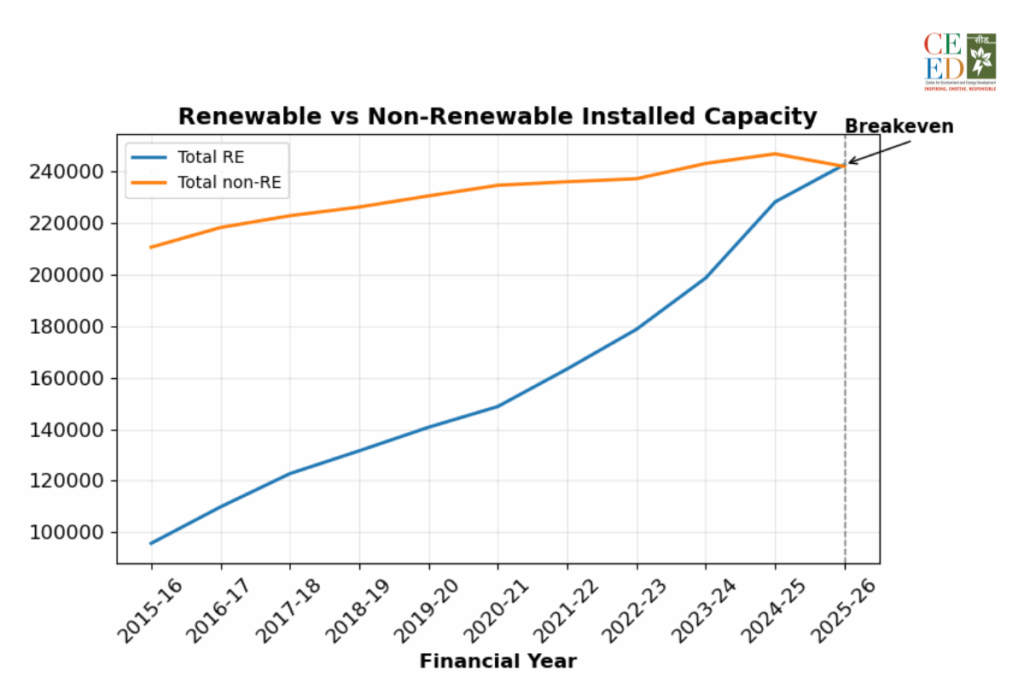
Fig. 4: Figure showing the renewable vs non-renewable installed capacity from FY 2015-16 to 2025-26. [FY 2025-26 is upto June 2025]. [Source: https://iced.niti.gov.in/energy/electricity/generation/capacity]
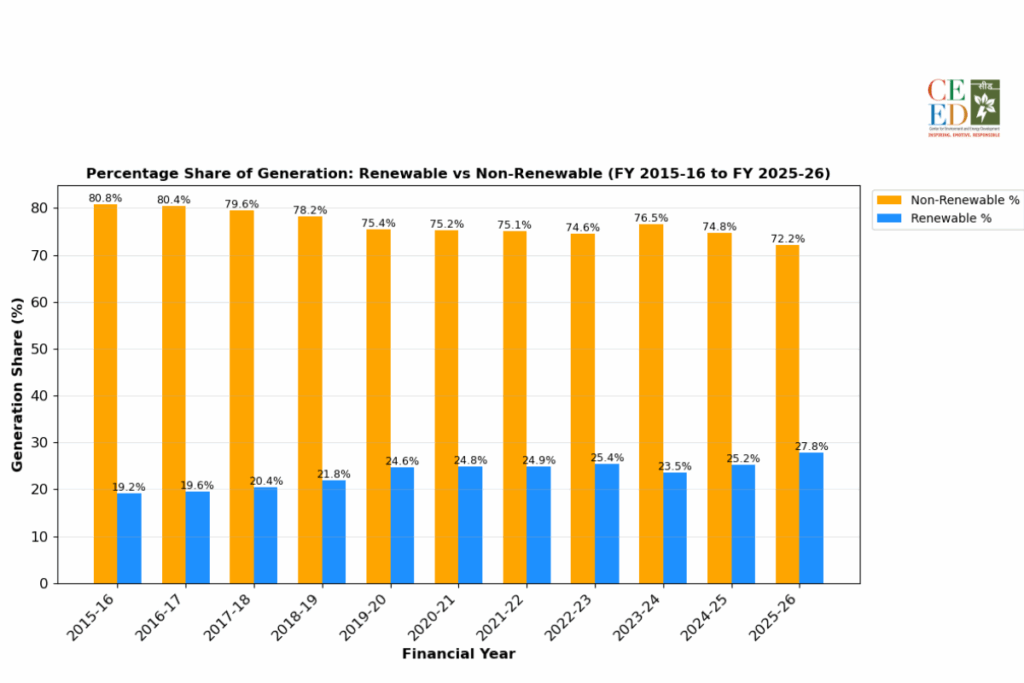
Fig. 5: Figure showing the percentage share of generation by renewables and non-renewables from FY 2015-16 to 2025-26. [FY 2025-26 is upto June 2025]. [Source: https://iced.niti.gov.in/energy/electricity/generation/power-generation]
Closing this gap requires deploying utility-scale storage like batteries and pumped hydro energy storage to absorb excess output and dispatch during deficits, as recommended by the IEA [5], alongside demand-side flexibility measures. As per National Electricity Plan (NEP) 2023 of Central Electricity Authority (CEA), the energy storage capacity requirement is projected to be 411.4 GWh (175.18 GWh from Pumped Hydro Energy Storage (PHES) and 236.22 GWh from Battery Energy Storage System (BESS)) in year 2031-32 [6].
Green hydrogen, produced through the electrolysis of water using renewable electricity, presents another promising route to maximize renewable energy utilization. Green Hydrogen can absorb excess renewable energy, thereby providing grid balancing and storage capability while also offering decarbonization pathways for sectors that are challenging to electrify directly, such as heavy industries, shipping, aviation, and long-haul transportation. India’s National Hydrogen Mission, launched in 2021, aims to develop the country into a global hub for GH₂ production and export. To scale Green Hydrogen deployment, India will need significant investments in electrolyser manufacturing, hydrogen storage infrastructure, and end-use technologies [7].
Way forward
To ensure India’s renewable energy goals translate into a lasting impact, the following measures are crucial:
- Flexible market designs, such as time-of-day tariffs, can incentivise power generation when it is most needed and reward rapid response.
- The current grid infrastructure, originally designed for conventional power sources, requires significant upgrades to efficiently integrate higher shares of renewable energy.
- Flexible grids equipped with advanced forecasting tools, grid automation, dynamic transmission capacity management, and smart grid technologies can greatly enhance renewable energy integration.
- Strategic investments in transmission corridors to link renewable-rich regions with high-demand centres can improve supply reliability.
- Reforms in grid access regulations can further facilitate the smooth integration of renewable energy into the national power system [8].
By combining these technical advancements with supportive policy measures, India can fully harness its renewable energy potential, transforming the 50% milestone into real-world power.
References:
[1] India’s Updated First Nationally Determined Contribution under Paris Agreement, Government of India, August 2022, (https://unfccc.int/sites/default/files/NDC/2022-08/India%20Updated%20First%20Nationally%20Determined%20Contrib.pdf)
[2] India to achieve about 50 percent cumulative electric power installed capacity from non-fossil fuel-based energy resources by 2030, Press Information Bureau, Government of India, Ministry of Environment Forest and Climate Change, April 2023, (https://www.pib.gov.in/Pressreleaseshare.aspx?PRID=1913467)
[3] India is committed to achieve the Net Zero emissions target by 2070 as announced by PM Modi, says Dr. Jitendra Singh, Press Information Bureau, Ministry of Science and Technology, Government of India, September 2023, (https://www.pib.gov.in/PressReleaseIframePage.aspx?PRID=1961797)
[4] India’s Renewable Rise: Non-Fossil Sources Now Power Half the Nation’s Grid, Press Information Bureau, Ministry of New and Renewable Energy, Government of India. July 2025, (https://www.pib.gov.in/PressReleasePage.aspx?PRID=2144627)
[5] Renewables Integration in India, International Energy Agency and NITI Aayog, July 2021. (https://www.iea.org/reports/renewables-integration-in-india)
[6] Energy Storage Systems (ESS) Overview. Ministry of New and Renewable Energy (MNRE), Government of India. (https://mnre.gov.in/en/energy-storage-systemsess-overview/)
[7] National Green Hydrogen Mission. Ministry of New and Renewable Energy (MNRE), Government of India (2023). (https://mnre.gov.in/en/national-green-hydrogen-mission/)
[8] Integration of smart grid with renewable energy sources: Opportunities and challenges–A comprehensive review. Kataray, Tarun, B. Nitesh, Bharath Yarram, Sanyukta Sinha, Erdem Cuce, Saboor Shaik, Pethurajan Vigneshwaran, and Abin Roy. Sustainable Energy Technologies and Assessments 58 (2023): 103363.